 In the last post talking about one of the most common forms (or at least known) of protection the natural environment, the Protected Natural Areas. However there are more formulas, such as the protection of species.
 If the Protected Natural Areas would put a "fence" around the territory to protect, in the classification of species occurs something similar, only with animals and plants. It is also a way of giving "value" to that species. Let us look how it's all about.
going to sin again a bit of regionalism (forgive me, as the Andalusian law is the best I know), but at least I hope to provide an example of what happens in other communities (and countries).
Human beings are incredibly strange when treating animals. There are completely opposite behaviors. In many cultures there has been a phenomenon of Totemism, something like animal worship. Certain tribe members feel identified with the attributes of a particular animal, and so the animal is sacred. But on the other hand (and this is evident especially in Europe) the animal was seen as vermin, as being almost diabolical. We can talk about this another time, but they are two manifestations of the same character: the horrible habit of giving human personality to animals.
Fortunately (or unfortunately), the plant has not this happened (with some exceptions). Nobody wants to be identified with a raspberry, no one sees danger in a geranium.
This explains why whenever we talk about endangered species think of the Bengal tigers and whales, when it found a much more threatened species under our feet as a "disgusting" fern hairy. In general, the more charismatic animals, anyone interested in seeing a documentary about "the fascinating world of moss" for example, but this is a trend that is changing for the good of the poor, hairy ferns.
protected species are threatened species. Threats can be of different nature: it may be due to excessive harvesting or hunting (as happens to the beasts), but also because their habitat disappears (as real estate speculation) because they are threatened by pests (as with the rabbits, but not protected), in competition with other introduced species generally (the U.S. against the European crab), or simply because he has come time and are not viable (our poor Iberian lynx, which we hope will not disappear but has few opportunities).
Moreover, the degree of threat may be different. Some species have stronger threats or reduce their populations faster. This also must be taken into account. They may even be cases where the species is preserved because it is, but its threat is not too, are charismatic species or representative ecosystems.
For this we have different categories, as in the case of natural areas, imposed by the state (which in turn will follow recommendations from other international organizations). The state also has its lists of threatened species (which are called catalogs). Autonomy will do what they want with them. May include new categories, provided they respect the state. Species can even change the category, where categories of greatest importance. (Said that state law is fundamental in nature.) For the state, the categories are as follows (the text in italics corresponds to the page ministry):
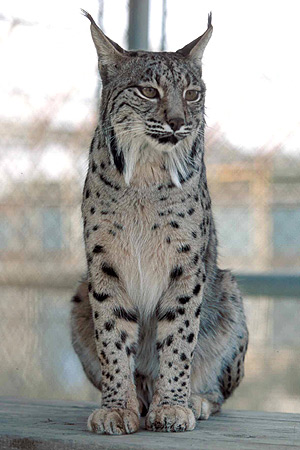
Endangered: A species, subspecies or population should be included in this category when the negative factors that affect it makes their survival is unlikely in the short term. That is, are those who are worse off. Require special conservation measures and are virtually untouchable. As an example, the poor Iberian lynx (Lynx pardinus )
Sensitive to habitat alteration: A taxon should be included in this category when not being endangered species faces a risk of extinction in the wild in the medium term due mainly occupied by a threatened habitat in serious decline, split or very limited. is the next category to Endangered Species. Applies when a species is not overly threatened, but their habitat itself. An example is the Zostera noltii, which is a seagrass (a type of "grass" growing on the seabed)

Vulnerable: A taxon be considered as such when without being in danger of extinction facing a risk of extinction in the medium term nature . Is the next category, one example is the black vulture ( Aegypius monachus)

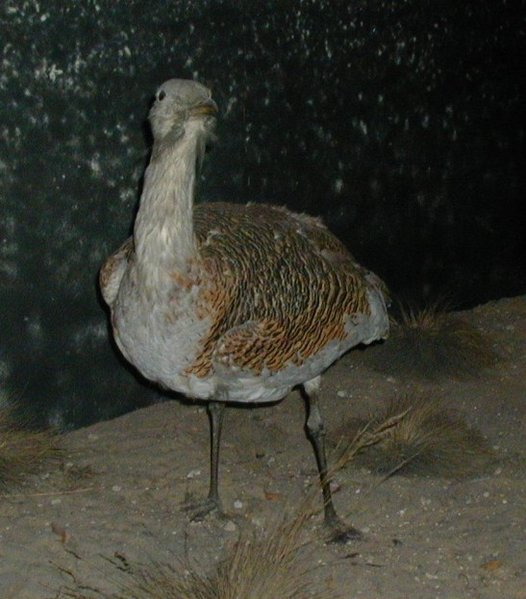
Of special interest: Taxa which do not meet the criteria for inclusion in the above categories, have a particular value according to their scientific, ecological, cultural or uniqueness. Here we put all the species we want to keep but need not necessarily be threatened. As such Bustard (Otis tarda ).
Each Autonomous Community, take the national and comprehensive catalog to the needs of their community. Thus, in Andalusia, we find a new category:
Extinct Species: Yes, in Andalusia are thus nostalgic ... although to be accurate, are extinct in the Andalusian territory, so it arises reintroduction. An example is the Prunus padus, or cherry cluster. It is the most threatened category and go before all of Endangered Species.

Well, how candidates are selected species?. Catalogs laws come as attachments. In the case of Andalusia it comes to Law 8 / 2003 of Flora and Fauna . For the English state, it is the Law 4 / 1989 on Conservation of Natural Areas and Wild Flora and Fauna . Anyway, the catalogs are reviewed periodically.
scientists are proponents and politicians to decide. So first you start developing what are the Red Lists. The Red List is not nothing but a list of endangered species, and what is the conservation proposal. As an example, Red List flora of Spain.
 These lists are screened, to the Red Books. In the red books there are fewer species on the lists but with more detailed information, including description, distribution, threats ... as an example, the second volume of Red Book of endangered wild flora Andalusia.
 Once reviewed, some species will be included in the list of threatened flora and fauna. As in the catalog Andalusian threatened flora and fauna. The lists and the books are not binding. If you step on a plant that is on a list and not the law is not going to happen. But woe to you as is.
course there are other ways to protect biodiversity, not only through catalogs. There are also international treaties, but that's a topic for another post.


0 comments:
Post a Comment