Monday, May 21, 2007

How To Prevent Weggies


In the last post talking about one of the most common forms (or at least known) of protection the natural environment, the Protected Natural Areas. However there are more formulas, such as the protection of species.

If the Protected Natural Areas would put a "fence" around the territory to protect, in the classification of species occurs something similar, only with animals and plants. It is also a way of giving "value" to that species. Let us look how it's all about.

going to sin again a bit of regionalism (forgive me, as the Andalusian law is the best I know), but at least I hope to provide an example of what happens in other communities (and countries).

Human beings are incredibly strange when treating animals. There are completely opposite behaviors. In many cultures there has been a phenomenon of Totemism, something like animal worship. Certain tribe members feel identified with the attributes of a particular animal, and so the animal is sacred. But on the other hand (and this is evident especially in Europe) the animal was seen as vermin, as being almost diabolical. We can talk about this another time, but they are two manifestations of the same character: the horrible habit of giving human personality to animals.

Fortunately (or unfortunately), the plant has not this happened (with some exceptions). Nobody wants to be identified with a raspberry, no one sees danger in a geranium.

This explains why whenever we talk about endangered species think of the Bengal tigers and whales, when it found a much more threatened species under our feet as a "disgusting" fern hairy. In general, the more charismatic animals, anyone interested in seeing a documentary about "the fascinating world of moss" for example, but this is a trend that is changing for the good of the poor, hairy ferns.

protected species are threatened species. Threats can be of different nature: it may be due to excessive harvesting or hunting (as happens to the beasts), but also because their habitat disappears (as real estate speculation) because they are threatened by pests (as with the rabbits, but not protected), in competition with other introduced species generally (the U.S. against the European crab), or simply because he has come time and are not viable (our poor Iberian lynx, which we hope will not disappear but has few opportunities).

Moreover, the degree of threat may be different. Some species have stronger threats or reduce their populations faster. This also must be taken into account. They may even be cases where the species is preserved because it is, but its threat is not too, are charismatic species or representative ecosystems.

For this we have different categories, as in the case of natural areas, imposed by the state (which in turn will follow recommendations from other international organizations). The state also has its lists of threatened species (which are called catalogs). Autonomy will do what they want with them. May include new categories, provided they respect the state. Species can even change the category, where categories of greatest importance. (Said that state law is fundamental in nature.) For the state, the categories are as follows (the text in italics corresponds to the page ministry):

Endangered:
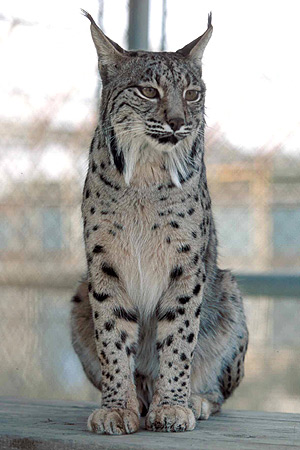
A species, subspecies or population should be included in this category when the negative factors that affect it makes their survival is unlikely in the short term. That is, are those who are worse off. Require special conservation measures and are virtually untouchable. As an example, the poor Iberian lynx (Lynx pardinus )

Sensitive to habitat alteration: A taxon should be included in this category when not being endangered species faces a risk of extinction in the wild in the medium term due mainly occupied by a threatened habitat in serious decline, split or very limited. is the next category to Endangered Species. Applies when a species is not overly threatened, but their habitat itself. An example is the Zostera noltii, which is a seagrass (a type of "grass" growing on the seabed)


Vulnerable: A taxon be considered as such when without being in danger of extinction facing a risk of extinction in the medium term nature . Is the next category, one example is the black vulture ( Aegypius monachus)

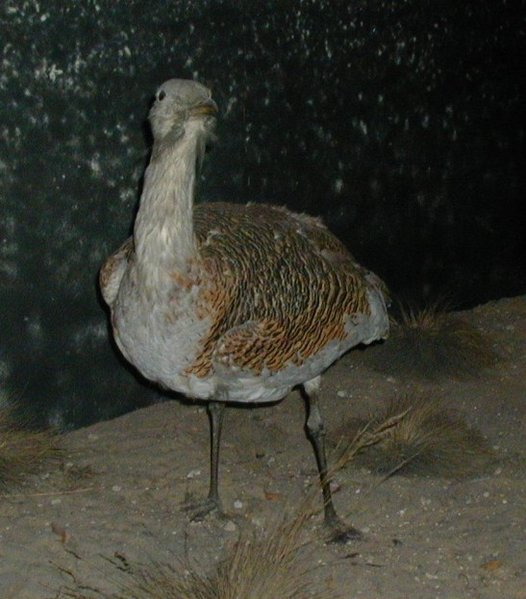
Of special interest: Taxa which do not meet the criteria for inclusion in the above categories, have a particular value according to their scientific, ecological, cultural or uniqueness. Here we put all the species we want to keep but need not necessarily be threatened. As such Bustard (Otis tarda ).

Each Autonomous Community, take the national and comprehensive catalog to the needs of their community. Thus, in Andalusia, we find a new category:

Extinct Species: Yes, in Andalusia are thus nostalgic ... although to be accurate, are extinct in the Andalusian territory, so it arises reintroduction. An example is the Prunus padus, or cherry cluster. It is the most threatened category and go before all of Endangered Species.

Well, how candidates are selected species?. Catalogs laws come as attachments. In the case of Andalusia it comes to Law 8 / 2003 of Flora and Fauna . For the English state, it is the Law 4 / 1989 on Conservation of Natural Areas and Wild Flora and Fauna . Anyway, the catalogs are reviewed periodically.

scientists are proponents and politicians to decide. So first you start developing what are the Red Lists. The Red List is not nothing but a list of endangered species, and what is the conservation proposal. As an example, Red List flora of Spain.
These lists are screened, to the Red Books. In the red books there are fewer species on the lists but with more detailed information, including description, distribution, threats ... as an example, the second volume of Red Book of endangered wild flora Andalusia.

Once reviewed, some species will be included in the list of threatened flora and fauna. As in the catalog Andalusian threatened flora and fauna. The lists and the books are not binding. If you step on a plant that is on a list and not the law is not going to happen. But woe to you as is.

course there are other ways to protect biodiversity, not only through catalogs. There are also international treaties, but that's a topic for another post.

How To Prevent Weggies


In the last post talking about one of the most common forms (or at least known) of protection the natural environment, the Protected Natural Areas. However there are more formulas, such as the protection of species.

If the Protected Natural Areas would put a "fence" around the territory to protect, in the classification of species occurs something similar, only with animals and plants. It is also a way of giving "value" to that species. Let us look how it's all about.

going to sin again a bit of regionalism (forgive me, as the Andalusian law is the best I know), but at least I hope to provide an example of what happens in other communities (and countries).

Human beings are incredibly strange when treating animals. There are completely opposite behaviors. In many cultures there has been a phenomenon of Totemism, something like animal worship. Certain tribe members feel identified with the attributes of a particular animal, and so the animal is sacred. But on the other hand (and this is evident especially in Europe) the animal was seen as vermin, as being almost diabolical. We can talk about this another time, but they are two manifestations of the same character: the horrible habit of giving human personality to animals.

Fortunately (or unfortunately), the plant has not this happened (with some exceptions). Nobody wants to be identified with a raspberry, no one sees danger in a geranium.

This explains why whenever we talk about endangered species think of the Bengal tigers and whales, when it found a much more threatened species under our feet as a "disgusting" fern hairy. In general, the more charismatic animals, anyone interested in seeing a documentary about "the fascinating world of moss" for example, but this is a trend that is changing for the good of the poor, hairy ferns.

protected species are threatened species. Threats can be of different nature: it may be due to excessive harvesting or hunting (as happens to the beasts), but also because their habitat disappears (as real estate speculation) because they are threatened by pests (as with the rabbits, but not protected), in competition with other introduced species generally (the U.S. against the European crab), or simply because he has come time and are not viable (our poor Iberian lynx, which we hope will not disappear but has few opportunities).

Moreover, the degree of threat may be different. Some species have stronger threats or reduce their populations faster. This also must be taken into account. They may even be cases where the species is preserved because it is, but its threat is not too, are charismatic species or representative ecosystems.

For this we have different categories, as in the case of natural areas, imposed by the state (which in turn will follow recommendations from other international organizations). The state also has its lists of threatened species (which are called catalogs). Autonomy will do what they want with them. May include new categories, provided they respect the state. Species can even change the category, where categories of greatest importance. (Said that state law is fundamental in nature.) For the state, the categories are as follows (the text in italics corresponds to the page ministry):

Endangered:
A species, subspecies or population should be included in this category when the negative factors that affect it makes their survival is unlikely in the short term. That is, are those who are worse off. Require special conservation measures and are virtually untouchable. As an example, the poor Iberian lynx (Lynx pardinus )


Sensitive to habitat alteration: A taxon should be included in this category when not being endangered species faces a risk of extinction in the wild in the medium term due mainly occupied by a threatened habitat in serious decline, split or very limited. is the next category to Endangered Species. Applies when a species is not overly threatened, but their habitat itself. An example is the Zostera noltii, which is a seagrass (a type of "grass" growing on the seabed)


Vulnerable: A taxon be considered as such when without being in danger of extinction facing a risk of extinction in the medium term nature . Is the next category, one example is the black vulture ( Aegypius monachus)

Of special interest: Taxa which do not meet the criteria for inclusion in the above categories, have a particular value according to their scientific, ecological, cultural or uniqueness. Here we put all the species we want to keep but need not necessarily be threatened. As such Bustard (Otis tarda ).


Each Autonomous Community, take the national and comprehensive catalog to the needs of their community. Thus, in Andalusia, we find a new category:

Extinct Species: Yes, in Andalusia are thus nostalgic ... although to be accurate, are extinct in the Andalusian territory, so it arises reintroduction. An example is the Prunus padus, or cherry cluster. It is the most threatened category and go before all of Endangered Species.

Well, how candidates are selected species?. Catalogs laws come as attachments. In the case of Andalusia it comes to Law 8 / 2003 of Flora and Fauna . For the English state, it is the Law 4 / 1989 on Conservation of Natural Areas and Wild Flora and Fauna . Anyway, the catalogs are reviewed periodically.

scientists are proponents and politicians to decide. So first you start developing what are the Red Lists. The Red List is not nothing but a list of endangered species, and what is the conservation proposal. As an example, Red List flora of Spain.
These lists are screened, to the Red Books. In the red books there are fewer species on the lists but with more detailed information, including description, distribution, threats ... as an example, the second volume of Red Book of endangered wild flora Andalusia.

Once reviewed, some species will be included in the list of threatened flora and fauna. As in the catalog Andalusian threatened flora and fauna. The lists and the books are not binding. If you step on a plant that is on a list and not the law is not going to happen. But woe to you as is.

course there are other ways to protect biodiversity, not only through catalogs. There are also international treaties, but that's a topic for another post.

Monday, May 14, 2007

How Many Tablespoons Pudding In A Pkg

Natural Protected Species

This weekend I spent in the Natural Park Sierras de Cazorla, Segura y las Villas . This park is pretty famous, among other things, the source of the river Guadalquivir. It is also Andaluza Game Reserve and has a wide range of rural tourism and active. And the latter is precisely what I was disappointed.

First, warn you that I was only there two days and had no time to see the park in all its splendor, but the large number of hotels, campgrounds, rental cottages, horse riding, multi adventure sheds ... and especially the large number of tourists gave me that impression. Of course, the park is very beautiful and I'm recommending anything not to visit, but it serves as an excuse to explain a few things.

Natural Parks in Andalusia (because much of the Community legislation on the subject is, and that's why I'm going to say may vary from one to another autonomy ... and no longer speak of countries), are a modalities of Protected Natural Areas (PNA).

The idea of \u200b\u200bthe PNA appeared with the first natural park of the story: Yellowstone Park, the same as one very similar to the beloved Yogi Bear in 1872. The basic idea is to protect areas of the territory with certain environmental values, limiting the activities that may be harmful.

course, to protect areas may have different characteristics and different risks, so now there are different forms of PNS. In Spain, the central government put some basic categories, and he clapped to the autonomous develop these ideas, and that if they could make some new ones. In Andalusia, the most important are:

National Park, with national parks, the aim is to create a network of spaces with distinctive ecosystems and representative on the national scene. Something like a collection of the best of the best. As they are for the state, is the central government that appoints, and just pick the cream:
(I put the list because they are a source of pride for neighbors, and did not want any to feel excluded). In general we can say it is a Natural Park Come over.


Natural Parks: are large areas with environmental and social values \u200b\u200bthat deserve to be preserved. Say you are the most attractive. Each chooses their own autonomy. There are glass cases, economic activity has developed in its interior, so they allow certain uses such as grazing or tourism, provided they do not exceed the capacity of space.


There are many other National Parks Natural Parks, some in Andalusia are the aforementioned Sierras de Cazorla, Segura and Las Villas in Jaén (to whom it is dedicated this post), Sierra de las Nieves in Malaga, Sierra Norte de Sevilla, Cabo de Gata in Almeria, or the Natural Park of the Acorns in Cadiz (there are many more but I can not put full list ...)

Nature Reserves: When people talk about natural areas, immediately go to the parks, but at least for me and in Andalusia, the reserves are much more important. Soin very fragile, very threatened and very important. Almost always gaps and aquatic because they fulfill these requirements.

In a nature reserve can not do anything, either visit. Everything is dedicated to the conservation and scientific research. Of course, as assumed by many limitations can not be large.


Some nature reserves in Andalusia are Fuente de Piedra, Malaga, where he raises the Flamenco, or San Francisco Dehesa de Huelva (which is among the few non-aquatic). Natural Monuments

: This category is dedicated to items and milestones rather than territory. Natural monuments and natural monuments are precisely. They are, for example, trees, geological formations Weird ... They are usually visited because it is not much protection as giving a "tag." Some examples include screw of the Torcal in Antequera (Málaga), Huesna Falls in Sevilla and Jaén Quejigo Coal.


Well, there are other figures such as suburban parks, natural landscapes and landscape protected, and that's to say nothing of the categories of the European Union or the relevant international treaties. There are other ways to protect the territory are ENP, as classified forest or game reserves (I can talk about it another time). At the moment we are left with these four that are well represented.

Parks Nature Reserve, Natural Monument and the various factors have limited its use in different ways. So in the parks, you can hunt or not depending on the park in question, while in the Reserves is strictly prohibited and the monument is too small.

For Parks, who is now what most concerns us, if we spend with the limitations, the populations that owns the land can Mosque. This should not, because it is the pastor angry because the bread loses her children by prohibiting grazing the first to set fire to the mountain. It is important that citizens are proud and to which you are interested conserve space. Therefore it is essential to allow activities are carried out. For example, active quarries within parks, can be constructed, grazing, gathering wood for charcoal, collecting mushrooms and asparagus, walking, driving ... Subject to compliance with conservation. Each park will have its own rules of what can be done and where.


The limit is what is called Payload. Cargo capacity in ecology and conservation is how much resource can be tapped it is depleted. For example, the carrying capacity of river water is the amount of water we can get without being dried. Of course, for quantifiable things, like mushrooms, water or wood is easy to limit, but what is the carrying capacity of the landscape? For construction? for tourism?

Yes, tourism is important, yes, promotes economic development in an area, but how far can we go? "Should really happy to get buses to pensioners to be fed to wild animals used to being fed the tourists?

The impression I got was not a natural park, it seemed more an amusement park. Actually that mass tourism leads neither to conservation or environmental education. The environment is not for the masses, can not be fitted lines as in the attractions, you can not sell jerseys with a picture of tourists next to a tree. The environment not only for the enjoyment .


Anyway, after this rant, Cazorla just say that I found a wonderful site, very nice and I recommend you go (provided they do not shout at the animals to turn around ... that I've seen this). Tourism is a much better more naturalistic and less on Sundays.

And of course I am very interested in reading your opinions: What are the natural spaces in your communities? What do you like most and least? ...


PS: I apologize beforehand if any of the images I've used have copy-right. If the author so wishes can I remove them, just remember that the box Shrodinger no profit, only seeks to popularize science and the environment.

How Many Tablespoons Pudding In A Pkg

Natural Protected Species

This weekend I spent in the Natural Park Sierras de Cazorla, Segura y las Villas . This park is pretty famous, among other things, the source of the river Guadalquivir. It is also Andaluza Game Reserve and has a wide range of rural tourism and active. And the latter is precisely what I was disappointed.

First, warn you that I was only there two days and had no time to see the park in all its splendor, but the large number of hotels, campgrounds, rental cottages, horse riding, multi adventure sheds ... and especially the large number of tourists gave me that impression. Of course, the park is very beautiful and I'm recommending anything not to visit, but it serves as an excuse to explain a few things.

Natural Parks in Andalusia (because much of the Community legislation on the subject is, and that's why I'm going to say may vary from one to another autonomy ... and no longer speak of countries), are a modalities of Protected Natural Areas (PNA).

The idea of \u200b\u200bthe PNA appeared with the first natural park of the story: Yellowstone Park, the same as one very similar to the beloved Yogi Bear in 1872. The basic idea is to protect areas of the territory with certain environmental values, limiting the activities that may be harmful.

course, to protect areas may have different characteristics and different risks, so now there are different forms of PNS. In Spain, the central government put some basic categories, and he clapped to the autonomous develop these ideas, and that if they could make some new ones. In Andalusia, the most important are:

National Park, with national parks, the aim is to create a network of spaces with distinctive ecosystems and representative on the national scene. Something like a collection of the best of the best. As they are for the state, is the central government that appoints, and just pick the cream:
(I put the list because they are a source of pride for neighbors, and did not want any to feel excluded). In general we can say it is a Natural Park Come over.


Natural Parks: are large areas with environmental and social values \u200b\u200bthat deserve to be preserved. Say you are the most attractive. Each chooses their own autonomy. There are glass cases, economic activity has developed in its interior, so they allow certain uses such as grazing or tourism, provided they do not exceed the capacity of space.


There are many other National Parks Natural Parks, some in Andalusia are the aforementioned Sierras de Cazorla, Segura and Las Villas in Jaén (to whom it is dedicated this post), Sierra de las Nieves in Malaga, Sierra Norte de Sevilla, Cabo de Gata in Almeria, or the Natural Park of the Acorns in Cadiz (there are many more but I can not put full list ...)

Nature Reserves: When people talk about natural areas, immediately go to the parks, but at least for me and in Andalusia, the reserves are much more important. Soin very fragile, very threatened and very important. Almost always gaps and aquatic because they fulfill these requirements.

In a nature reserve can not do anything, either visit. Everything is dedicated to the conservation and scientific research. Of course, as assumed by many limitations can not be large.


Some nature reserves in Andalusia are Fuente de Piedra, Malaga, where he raises the Flamenco, or San Francisco Dehesa de Huelva (which is among the few non-aquatic). Natural Monuments

: This category is dedicated to items and milestones rather than territory. Natural monuments and natural monuments are precisely. They are, for example, trees, geological formations Weird ... They are usually visited because it is not much protection as giving a "tag." Some examples include screw of the Torcal in Antequera (Málaga), Huesna Falls in Sevilla and Jaén Quejigo Coal.


Well, there are other figures such as suburban parks, natural landscapes and landscape protected, and that's to say nothing of the categories of the European Union or the relevant international treaties. There are other ways to protect the territory are ENP, as classified forest or game reserves (I can talk about it another time). At the moment we are left with these four that are well represented.

Parks Nature Reserve, Natural Monument and the various factors have limited its use in different ways. So in the parks, you can hunt or not depending on the park in question, while in the Reserves is strictly prohibited and the monument is too small.

For Parks, who is now what most concerns us, if we spend with the limitations, the populations that owns the land can Mosque. This should not, because it is the pastor angry because the bread loses her children by prohibiting grazing the first to set fire to the mountain. It is important that citizens are proud and to which you are interested conserve space. Therefore it is essential to allow activities are carried out. For example, active quarries within parks, can be constructed, grazing, gathering wood for charcoal, collecting mushrooms and asparagus, walking, driving ... Subject to compliance with conservation. Each park will have its own rules of what can be done and where.


The limit is what is called Payload. Cargo capacity in ecology and conservation is how much resource can be tapped it is depleted. For example, the carrying capacity of river water is the amount of water we can get without being dried. Of course, for quantifiable things, like mushrooms, water or wood is easy to limit, but what is the carrying capacity of the landscape? For construction? for tourism?

Yes, tourism is important, yes, promotes economic development in an area, but how far can we go? "Should really happy to get buses to pensioners to be fed to wild animals used to being fed the tourists?

The impression I got was not a natural park, it seemed more an amusement park. Actually that mass tourism leads neither to conservation or environmental education. The environment is not for the masses, can not be fitted lines as in the attractions, you can not sell jerseys with a picture of tourists next to a tree. The environment not only for the enjoyment .


Anyway, after this rant, Cazorla just say that I found a wonderful site, very nice and I recommend you go (provided they do not shout at the animals to turn around ... that I've seen this). Tourism is a much better more naturalistic and less on Sundays.

And of course I am very interested in reading your opinions: What are the natural spaces in your communities? What do you like most and least? ...


PS: I apologize beforehand if any of the images I've used have copy-right. If the author so wishes can I remove them, just remember that the box Shrodinger no profit, only seeks to popularize science and the environment.

Friday, May 11, 2007

How To Create A Moss Rock Fountain

Tourism Awards and 20 minutes

Then after a while without posting, I echo the news that affects us in the blogosphere.

has already taken delivery of 20 prizes Blogs free daily 20 minutes. Link to view winners. Small

tantrum: Blogs in the category of Science and Environment, have not won any of my two favorite blogs: Strange But Useless or Science Stories ... a salute to omalaled and Remo. Both are two great popular science blogs, and a reflection of this is that were finalists. Another hug for blogs other contestants in this category (as Shora, of MedTempus another great blog of medical issues).

And above all, congratulations to aberron of Fogonazos , to obtain the coveted prize. Flashes is another great blog with very interesting topics.

also congratulate the other contestants, finalists and winners, for helping to keep the blogosphere so crowded.

I will try to put my two cents, although I admit that I've had little time, and over shared with CPC , my other blog Petisuis (Author of goings )

In short, many more stories about what bad really bad that wifi networks may be more chapters of Statistics for Dummies and many other content ... (HerrAlvaro, we are not going to make a Thermodynamics for Dummies?)

How To Create A Moss Rock Fountain

Tourism Awards and 20 minutes

Then after a while without posting, I echo the news that affects us in the blogosphere.

has already taken delivery of 20 prizes Blogs free daily 20 minutes. Link to view winners. Small

tantrum: Blogs in the category of Science and Environment, have not won any of my two favorite blogs: Strange But Useless or Science Stories ... a salute to omalaled and Remo. Both are two great popular science blogs, and a reflection of this is that were finalists. Another hug for blogs other contestants in this category (as Shora, of MedTempus another great blog of medical issues).

And above all, congratulations to aberron of Fogonazos , to obtain the coveted prize. Flashes is another great blog with very interesting topics.

also congratulate the other contestants, finalists and winners, for helping to keep the blogosphere so crowded.

I will try to put my two cents, although I admit that I've had little time, and over shared with CPC , my other blog Petisuis (Author of goings )

In short, many more stories about what bad really bad that wifi networks may be more chapters of Statistics for Dummies and many other content ... (HerrAlvaro, we are not going to make a Thermodynamics for Dummies?)